
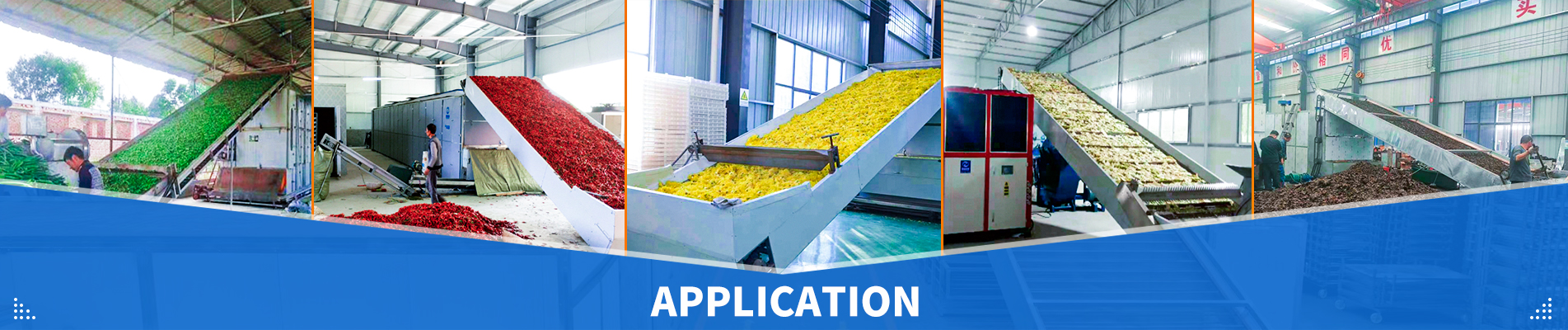
Chili Drying in Guizhou
In the primary chili-producing regions of Guizhou, traditional methods—relying on manual sun-drying or earthen-kiln roasting—have long faced the predicament of being “at the mercy of the weather.” Spoilage caused by overcast and rainy conditions, along with defects such as “mottled skin” and darkened coloration resulting from traditional processing techniques, previously severely compromised the market appeal of high-quality Guizhou chilies. Consequently, the selling price per catty often lagged several yuan behind that of premium dried chilies. Determined to shed this “low-quality” label, Jinlu Machinery developed and introduced a customized mesh-belt chili dryer, specifically engineered to address the unique characteristics of chilies—namely, their delicate skins and strict requirements regarding color retention. Utilizing multi-layer circulating airflow technology, this equipment precisely maintains the drying temperature within the “golden range” of 60°C to 70°C, effectively simulating optimal natural sun-drying conditions. This not only perfectly preserves the chilies’ natural red pigments and aromatic compounds but also enables continuous, round-the-clock operation with a daily processing capacity reaching tens of tons—thereby putting a definitive end to the historical plight of chili farmers who once suffered from “high yields but low returns.”
The core advantages of the Jinlu mesh-belt dryer lie in its capabilities for “color locking and shape preservation” and its “versatility for multiple applications.” It eschews the harsh, rapid, high-temperature roasting methods of the past in favor of gentle hot-air penetration technology. This ensures that the dried chilies retain their plump, full-bodied shape and exhibit a glossy, vibrant red hue, meeting export-grade standards for visual quality. Furthermore, to accommodate the seasonal nature of agricultural production, the equipment can be easily reconfigured—by adjusting operational parameters—to dry a diverse range of Guizhou’s specialty agricultural products, including Sichuan pepper, traditional Chinese medicinal herbs, and shiitake mushrooms. This versatility significantly boosts the equipment’s return on investment. This efficient, energy-saving, and eco-friendly processing method has not only helped farmers reduce their operating costs by over 30% but has also completely eliminated the issue of excessive sulfur residue often associated with traditional coal-fired drying methods, thereby successfully opening the doors to high-end domestic and international markets for Guizhou chilies.
From a broader global perspective, the technical specifications and design philosophy of this equipment align perfectly with the agricultural needs of countries situated along the “Belt and Road” initiative. In major chili-producing regions across South and Southeast Asia—characterized by hot, humid climates and prolonged rainy seasons (such as India and Thailand)—Jinlu dryers are engineered to rapidly adapt to high-humidity environments, thereby minimizing crop losses during the monsoon season. In the Middle East and Africa (including countries like Egypt and Nigeria), the dryers’ key advantages—simplicity of operation, exceptional durability, and compatibility with diverse heat sources (such as electricity and biomass pellets)—effectively facilitate the local agricultural sector’s transition from traditional sun-drying methods to large-scale, standardized processing. Whether the goal is to enhance the marketability of agricultural produce or to reduce energy consumption and environmental pollution, Jinlu Machinery leverages the robust capabilities of “Made in China” manufacturing to provide chili and cash crop-producing regions worldwide with a reliable solution—one that promises to “dry” a path toward a vibrant and prosperous future.